Feasibility vs. constraints – learning with mobile phones

Mar / 25 / 2010

Mobile phones have tiny screens and keyboards, and need an agile finger to handle them. Yet some pioners believe mobile phones might be a key learning device for the future, and have even come up with smart ideas to make learning on the go a motivating and interactive approach. No doubts that if mobile learning (mlearning) works, it can potentially reach millions of people, who have difficulties to get access to learning materials, otherwise.
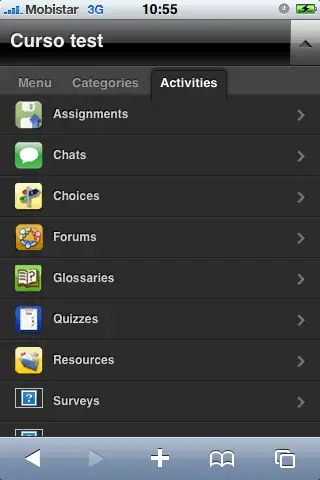
Moodle for the Iphone


For Steve Vosloo “…The cellphone is the kindle of Africa, until the prices of ebook readers come down…” (Tweet) Steve Vosloo from the M4Lit programm at the Shuttlewoth Foundation in South Africa sees here a potential for youth education. He experiments with an interactive mobile novel (www.kontax.mobi). “We want reading to be social (community) and engaging (interactivity). We’re reaching teens where they are — on their mobile phones”. He points out, “Teens don’t write enough”, but “teens love their phones.” So, could technology be an incentive to make youngsters learn?

My friend Inge de Waard is working on another interesting mlearning project around health. In her case, physicians working on HIV/AIDS care, in remote locations, are offered to learn through mobile phones about the latest medical information. “The didactic material consists of 3D animations simulating interactive clinical cases which are adapted to mobile devices.” The project is currently developing a mobile version of the well known learning plattform “moodle.” This way doctors not only get the course material to their mobile phone, but potentially can interact with colleagues around practice experiences.

For Robert Hawkins of the World Bank the future of education is around ubiquitous learning. “With the emergence of increasingly robust connectivity infrastructure and cheaper computers, school systems around the world are developing the ability to provide learning opportunities to students “anytime, anywhere”.

Mobile learning is still in its infancy, but it might play an important role to deliver tailored information to mobile devices and make it possible to learn anywhere through state of the art knowledge. Nevertheless, the lessons from the One Laptop per Child showed how technology can easily find here its borders. Most important, we learn only about 10% through reading (learning pyramid) and a lot more by exchanging with others and practicing. The last two methods are still very difficult to establish with a mobile phone.

No related posts.

{ 23 comments… read them below or add one }

Tom Schrieber March 25, 2010 at 5:34 pm

Good post RT @ckreutz: write about Feasibility vs. constraints – learning with mobile phones http://bit.ly/aapxgA

Roxanna Samii March 25, 2010 at 6:15 pm

RT @ckreutz: write about Feasibility vs. constraints – learning with mobile phones http://bit.ly/aapxgA

Knowledge for Health March 25, 2010 at 6:22 pm

RT @ict4d Mobile literacies: bridging the gap b/w phone & book http://bit.ly/dn0z7B Learning with mobile phones http://bit.ly/aapxgA #yam

km4dev March 25, 2010 at 6:52 pm

Feasibility vs. constraints – learning with mobile phones: http://bit.ly/aapxgA #km4dev

Afrika Kabissa March 25, 2010 at 7:05 pm

RT @ckreutz: write about Feasibility vs. constraints – learning with mobile phones http://bit.ly/aapxgA

WITNESS March 25, 2010 at 7:13 pm

RT @ckreutz: write about Feasibility vs. constraints – learning with mobile phones http://bit.ly/aapxgA

Najam March 25, 2010 at 7:19 pm

RT @witnessorg: RT @ckreutz: write about Feasibility vs. constraints – learning with mobile phones http://bit.ly/aapxgA

iGetcha.org March 25, 2010 at 7:41 pm

RT @ict4d: Mobile literacies – bridging the gap between phone & book http://bit.ly/dn0z7B Learning with mobile phones http://bit.ly/aapxgA

AppLab March 25, 2010 at 7:49 pm

Mobile literacies – bridging the gap between phone & book http://bit.ly/dn0z7B – Learning with mobile phones http://bit.ly/aapxgA RT @ict4d

James BonTempo March 26, 2010 at 12:20 am

RT @ict4d: Mobile literacies – bridging the gap between phone & book. http://bit.ly/dn0z7B – Learning with mobile phones http://bit.ly/aapxgA

Convene March 26, 2010 at 8:28 am

#Learning with #mobile phones http://bit.ly/aapxgA /via @ict4d

Afrika Kabissa March 26, 2010 at 9:09 am

RT @witnessorg: RT @ckreutz: write about Feasibility vs. constraints – learning with mobile phones http://bit.ly/aapxgA

Ignatia March 26, 2010 at 11:55 am

RT @TopsyRT: Feasibility vs. constraints – learning with mobile phones http://bit.ly/aapxgA

ignatia/Inge de Waard March 26, 2010 at 11:58 am

hi Christian, what a great post! Thank you so much for mentioning our project for HCWs.
Btw: I admire the way you can link many valuable resources into one post. It is always a treat to read your blog. I will be meeting Steve Vosloo at eLearning Africa, and I really look forward to it.

taitdave March 26, 2010 at 12:15 pm

RT @ict4d: Mobile literacies–bridging the gap between phone & book. http://bit.ly/dn0z7B – Learning w/ mobile phones http://bit.ly/aapxgA

giulio quaggiotto March 26, 2010 at 12:42 pm

Feasibility vs. constraints – learning with mobile phones in Africa and beyond http://bit.ly/ccWcOa

Loretta Ishida March 26, 2010 at 1:45 pm

Another example: literacy through cell phones in Niger http://www.isbrandt.com/

Mike Trucano March 26, 2010 at 1:49 pm

Hi Cristian,
Thanks for the very useful blog post here.
Thanks also for mentioning/linking to the article on the World Bank EduTech blog. Just a quick clarification: While I do write regularly on topics related to mobile phones (http://blogs.worldbank.org/edutech/category/tags/mobile-phones), the post you reference above was actually written by my colleague Bob Hawkins.
Cheers,
Mike

suifaijohnmak March 26, 2010 at 11:06 pm

RT @TopsyRT: Feasibility vs. constraints – learning with mobile phones http://bit.ly/aapxgA

Letsbuy com March 27, 2010 at 4:07 am

Feasibility vs. constraints – learning with mobile phones http://bit.ly/aNQeRV

Ricky Damien March 30, 2010 at 4:36 am

Feasibility vs. constraints – learning with mobile phones http://bit.ly/9f2PlN

Hannes Jähnert April 2, 2010 at 11:41 am

Oh! I see … I am after the time – now comments exclusivly commin’ in via Twitter. How it works? Please tell me!

How ever here my old school comment via the editor at your blog :-D
During my studies of Social Work in Erfurt I worked with my prfoessor (Cilie Rentmeister) with a mobile learning program named “Save Selma” (http://www.save-selma.de/). The main point was the-what-to-do-learning in points of sexual abuse. At this time we thougt successfull progamms for mobil phones have to provide either entertaiment or information … Save Selma was a hybrid of both. What do you think are their some new needs of mobil education or perhaps edutaiment in european
societiy?!
Regards
Hannes

Christian Kreutz April 2, 2010 at 8:41 pm

@Hannes Twitter seem more reactions than comments. It is made through a wordpress plugin. I prefer comments and so thank you for yours. Yes I think mobile education through games is a great opportunity. For the iphone games are most popular and there are many great examples of games for education. A good example is done by Butterfly Works: GETH20 “A (serious) game which simulates the complexity of life in the slums, the scarcity of resources, how to deal with them and prevent escalation of conflict. Mobile and board.” http://www.butterflyworks.org/content/13802/geth20 ANother interesting project is HarassMap – Tracking sexual harassment in Egypt: http://mobileactive.org/harassmap-plan-track-sexual-harassment-egypt

Leave a Comment


Notify me of followup comments via e-mail. You can also subscribe without commenting.

{ 1 trackback }

Previous post:

Next post: